
Graduate Program Overview
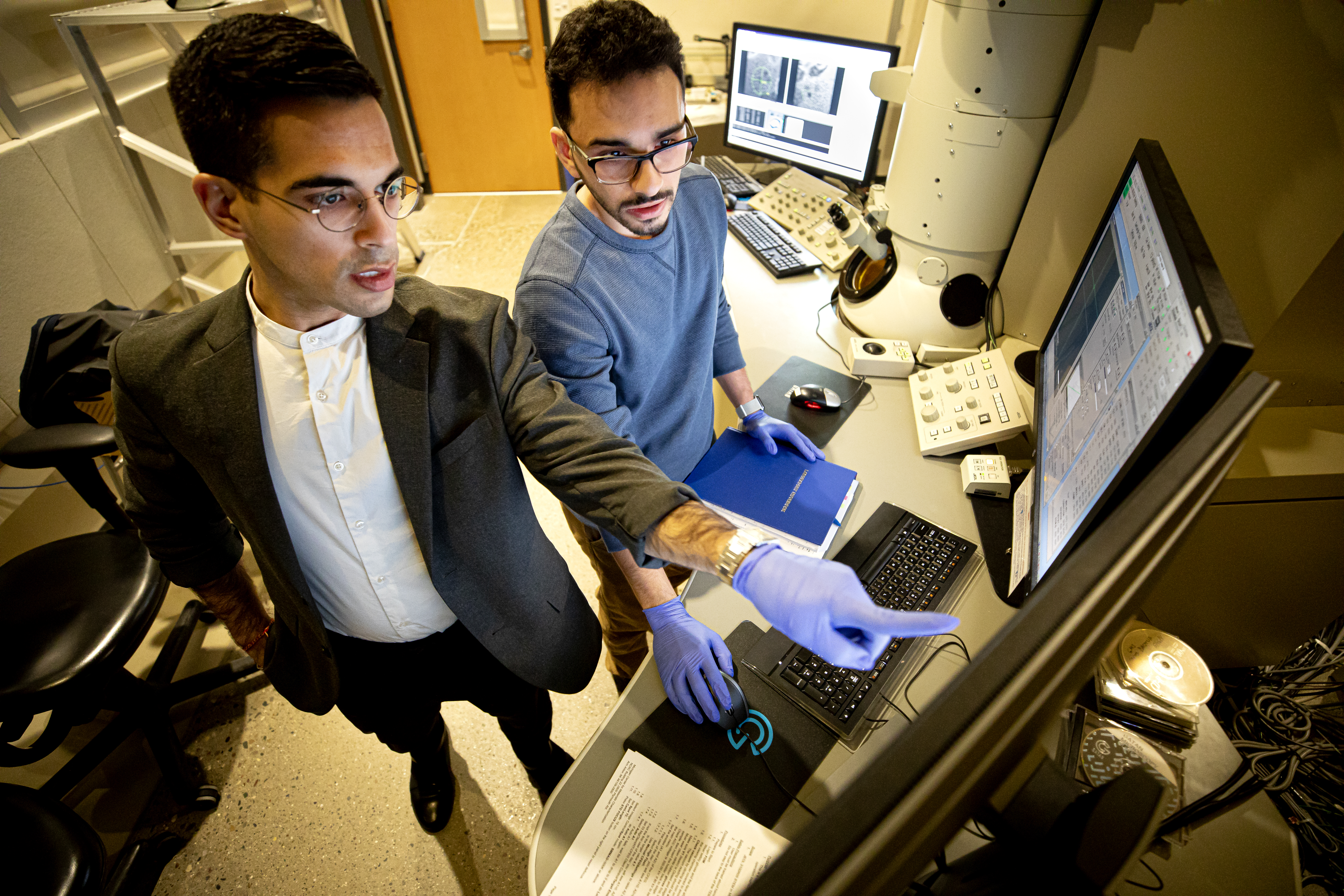
The University of Michigan Department of Materials Science & Engineering is one of the oldest and largest programs in the country. We offer a challenging, well-rounded education in one of the most technically diverse departments in the country. Our professors work in areas from organic electronics to biomaterials to metallurgy and ceramics, and they can’t wait to work with the next generation of materials scientists and engineers.
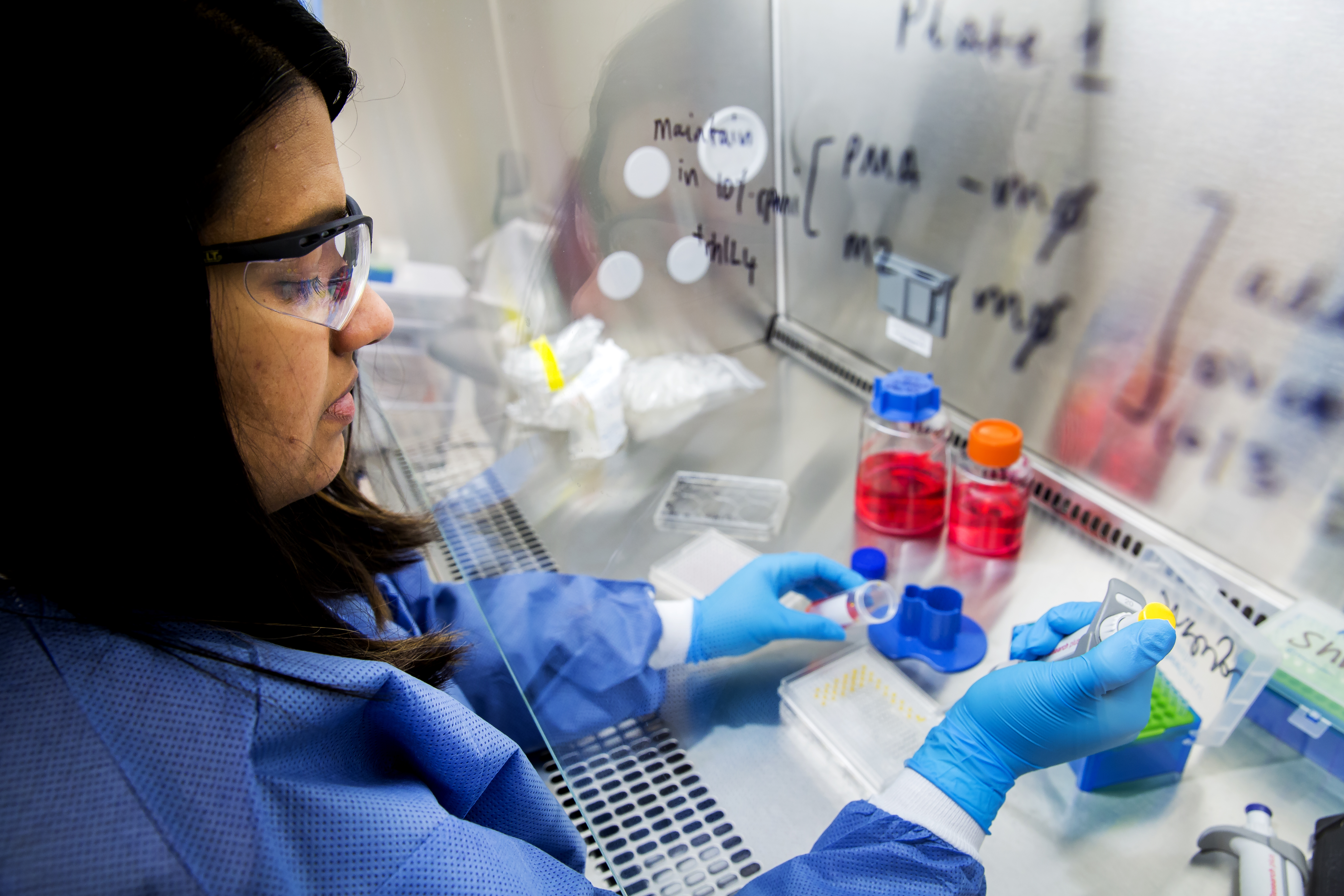
The University of Michigan is home to an internationally recognized and diverse faculty, a diverse and collegial student body, and high levels of research funding. We host a wide range of state-of-the-art research facilities for advanced materials research.
Our major research areas are:
Structural Materials
Functional Materials
Soft Materials
Computational Materials
Top-notch facilities
Graduate students access these high-caliber materials synthesis and characterization facilities:
-
The Michigan Center for Materials Characterization (MC)2 includes a state-of-the-art electron microscope and focused ion beam machining equipment.
-
The X-ray Micro Analysis Laboratory (XMAL) provides nanoscale characterization capabilities to students, faculty and other members of the university community.
-
The Lurie Nanofabrication Facility has equipment for silicon lithography, thin-film deposition, e-beam lithography and electroplating.
An interdisciplinary approach to research
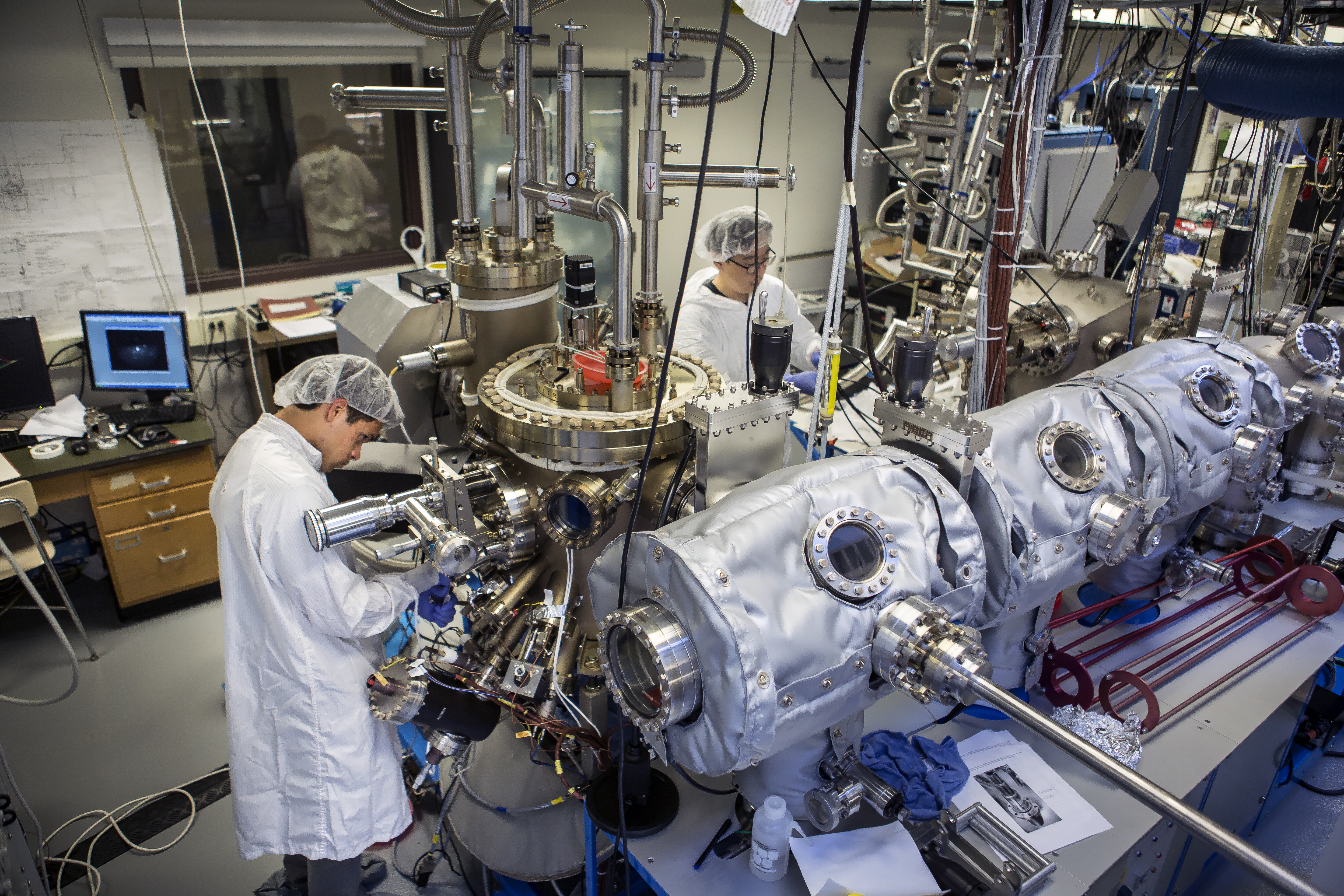
Materials science and engineering is a naturally multidisciplinary field. When there are advances in nanoscience, energy conversion and storage, photonics and sensor design, MSE research advances further. When we are able to advance the field materials science, other fields also advance.
The majority of our 25-member faculty hold joint appointments in other engineering and scientific disciplines, including macromolecular science and engineering, chemical, biomedical and mechanical engineering, physics, biology and chemistry.
Our faculty work together with graduate students to create cutting-edge research on campus.
MSE grad students tell their stories. Read some research highlights from our graduate students and hear from our students about their experiences as MSE graduate students.
Strong financial support for funding
Research expenditures are among the highest in the College – nearly $44M in 2023, demonstrating the focus on not merely keeping abreast of but leading developments in the field.
The MSE Department faculty lead a wide range of federally funded multi-disciplinary research efforts, including:
-
$32.7M DoE Software Innovation Center established in 2012, called the PRedictive Integrated Structural Materials Science Center, or PRISMS, led by MSE Professor John Allison.
-
$18M Center for Materials Innovation, funded by NSF in 2023, seeks to build a campus-wide ecosystem of researchers that converge on materials solutions to problems facing society, such as plastics recycling. The project is led by MSE Professor Rachel Goldman.
- $12M ICECycle, funded by the Defense Advanced Research Projects Agency in 2023, seeks to develop new, nontoxic materials that could one day keep solar panels and airplane wings ice-free, or protect first responders from frostbite and more. The project is led by MSE Professor Anish Tuteja.
- $7.5M project led by MSE Professor Rachel Goldman and funded by a Department of Defense MURI award, will embrace imperfections in next-generation electronic devices, possibly enabling faster and more efficient information processing.
Research and training grants include:
-
Three multi-million-dollar, multi-investigator, interdisciplinary grants from the U.S. Department of Defense, the Department of Education and the National Science Foundation.
-
The department also has a training grant from the Department of Education, providing fellowships for research and studies in areas of national need.
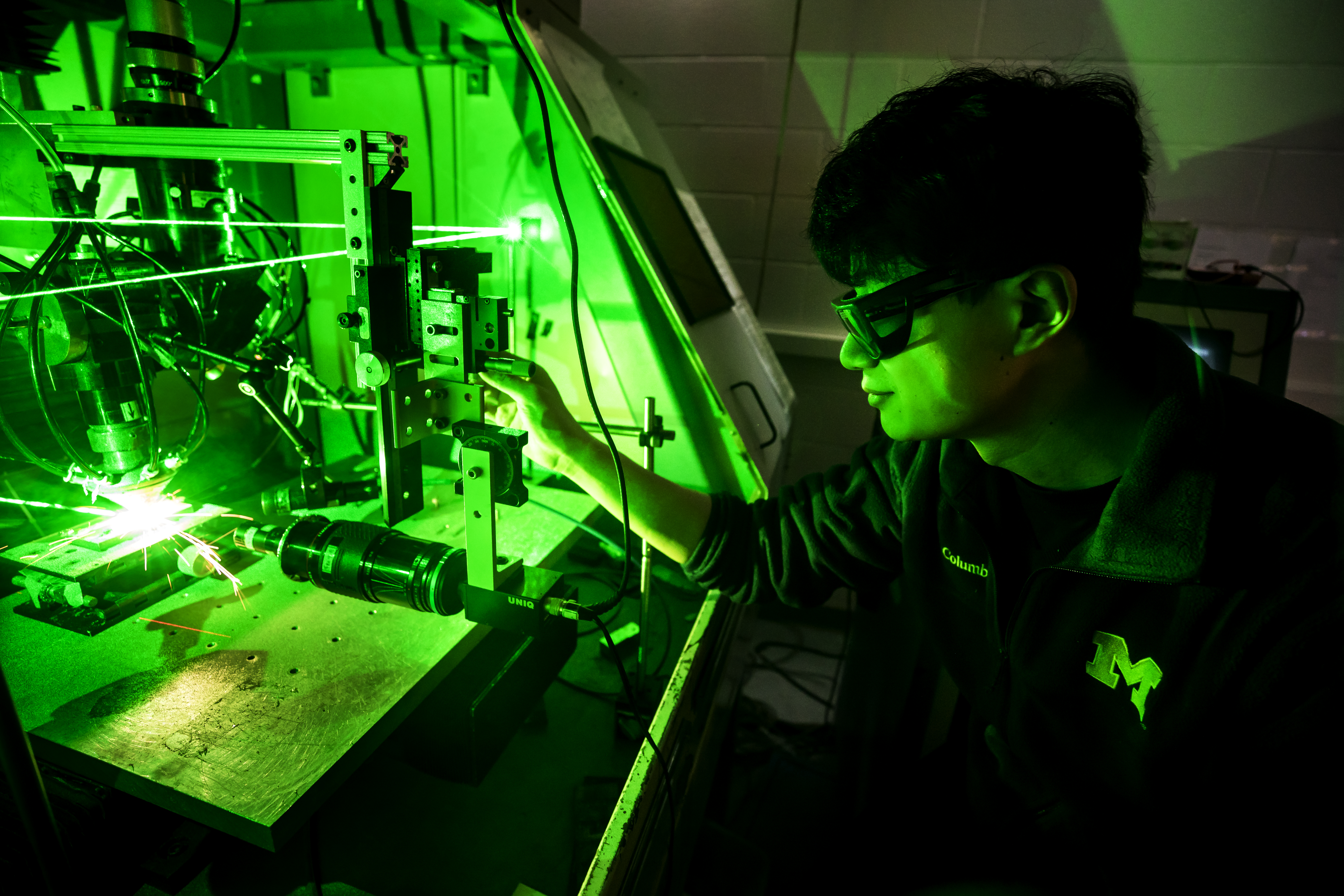
Industrial funding is strong and exceeds the College of Engineering average.
Companies providing funding include:
-
Dow Corning
-
Ford Motor Co.
-
General Electric
-
General Motors
-
Semiconductor Research Corp.
- Toyota
Quick facts about MSE
-
138 students pursuing MSE degrees
-
20 additional students from other disciplines, advised by MSE jointly appointed faculty in other departments.
-
25 core faculty plus 24 affiliated faculty, with a highly productive research and education portfolio.
-
Four faculty members of the National Academy of Engineering
-
Consistent top 10 U.S. News and World Report ranking for the department, one of 9 top 10 College of Engineering departments
-
Women comprise nearly a quarter of faculty, above average
-
Women and underrepresented minorities make up 30% of the graduate class
Ready to explore the MSE graduate program?
What do you think? If our program interests you, please check out the curriculum and how to apply. You may also want to take a look at financial aid and housing options and explore what life would be like in Ann Arbor. Interested in a master's degree? Find out more!

The city of Ann Arbor – aka “Tree Town” (for its many parks and green spaces) – is small enough for making friends easily yet large enough to offer cultural opportunities like music, theatre, and art in a safe, walkable downtown with hundreds of shops and restaurants. It's no wonder Ann Arbor is consistently ranked as one of the best places to live in the country.
Get to know Ann Arbor (external link)